
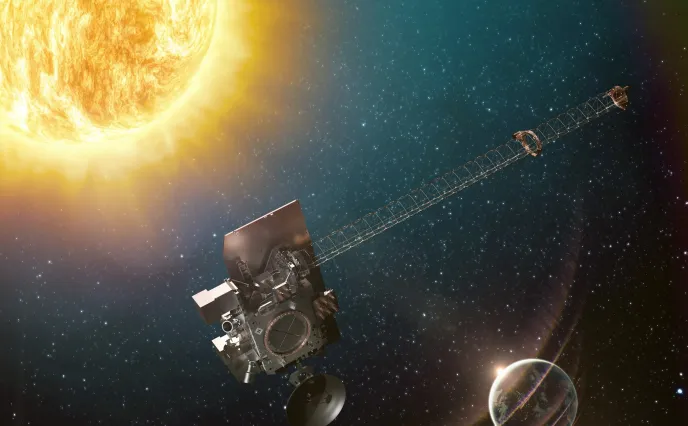
Thales Alenia Space has signed a contract with BAE Systems, spacecraft prime contractor, for the provision of key communication equipment for the Space weather Observations at L1 to Advance Readiness (SOLAR) project, which is being developed for the National Oceanic and Atmospheric Administration (NOAA)’s Space Weather Next program by NASA’s Goddard Space Flight Center in Greenbelt, Maryland. The SOLAR project consists of two independently launched observatories, SOLAR-A and SOLAR-B, that together with the Space Weather Follow On - Lagrange 1 observatory will ensure the necessary resiliency to equip NOAA’s Space Weather Prediction Center operations with 24/7 observations that are needed for space weather predictions.
Thales Alenia Space in Spain will deliver the S-band telemetry, tracking and command (TT&C) transponders, used to command the spacecraft from Earth, as well as the X-band modulator needed to download the science data acquired by the spacecraft. Thales Alenia Space in Belgium will provide the X-band travelling wave tube amplifier (TWTA) built on the travelling wave tubes (TWT) by Thales.
"It is a great honor to contribute to NOAA’s SOLAR project leveraging on our comprehensive track record in space communications, from Low Earth Orbit to Deep Space. This mission will be vital to monitor space weather and provide warnings and alerts to protect critical infrastructure in space and on Earth", said Roberto Minella, Thales Alenia Space EVP Countries and Equipment.
Space weather
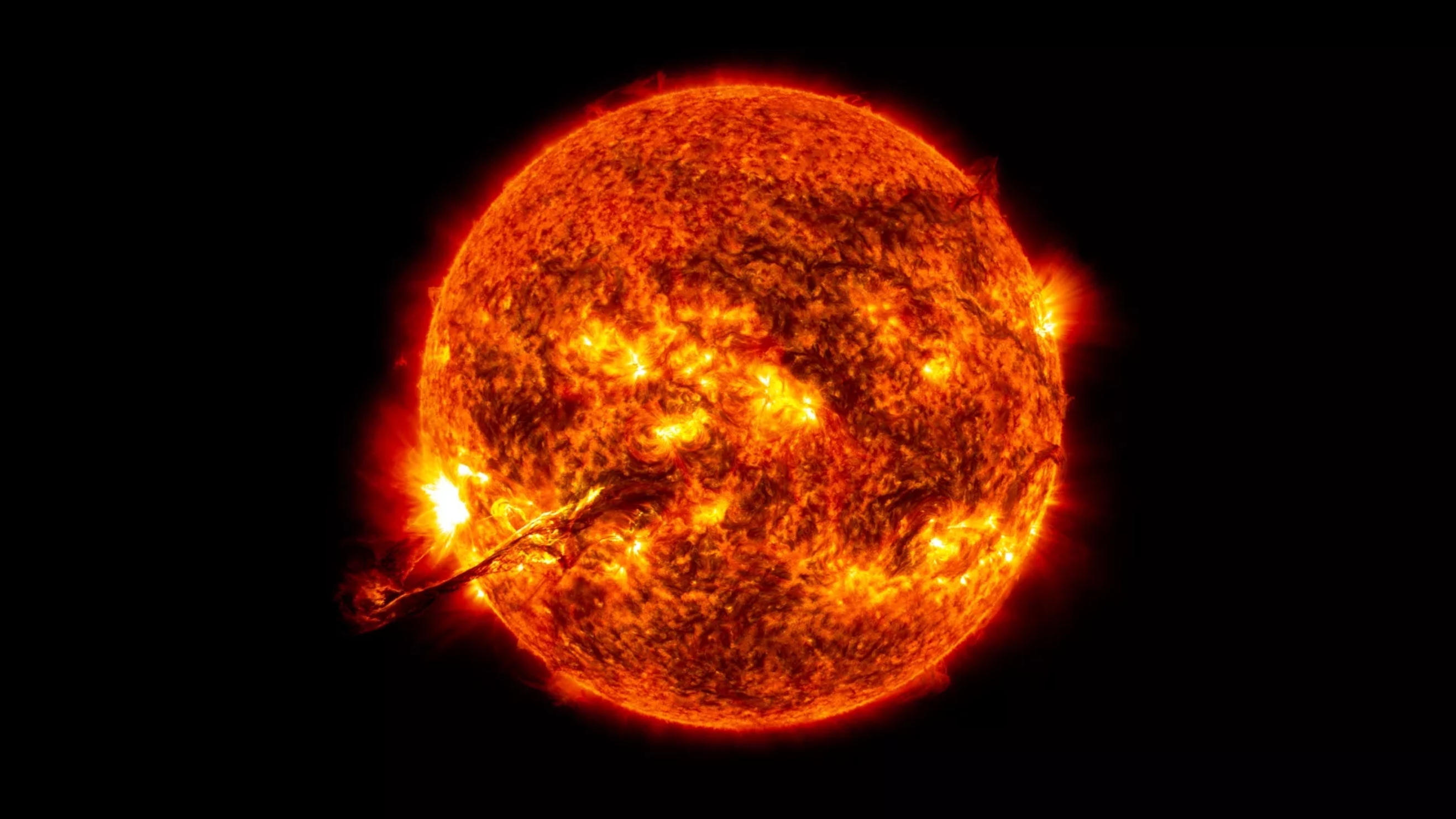
The environmental conditions in space, known as space weather, are influenced by the solar activity and can have a significant impact on human activity, both in space and on Earth, and even endanger life or health. Extreme space weather events can damage electrical power grids, interrupt radio and satellite communications and cause global navigation satellite systems such as GPS and Galileo to fail, affecting numerous sectors ranging from telecommunications, aviation, road transportation and agriculture to search & rescue, national security and defense. Exposure to increased radiation can also lead to health risks for astronauts in orbit, as well as increased radiation doses to crews at long-haul aircraft altitudes.
The physical phenomena that make up space weather include large amounts of radiation and high-energy particles emitted during solar radiation and geomagnetic storms in the form of solar flares, i.e. giant bursts of radiation travelling at the speed of light, solar energetic particles (SEP) such as protons and electrons, and coronal mass ejections (CME) formed by giant clouds of plasma.
The Space Weather Next SOLAR project will be equipped with a suite of instruments to provide coronal imagery and solar wind measurements (plasma properties and magnetic field). It will enable continuous, low-latency, high-availability, high-accuracy space weather observations to provide warnings and alerts to protect critical infrastructure on Earth, in space and advance our scientific understanding of space weather and its effects.
A key partner in space communications technologies
For more than 40 years Thales Alenia Space has contributed to hundreds of space missions providing critical communications technologies, from Low Earth Orbit to Deep Space, including flagship NASA missions to explore the Universe such as the James Webb Space Telescope, the Nancy Grace Roman Space Telescope, the Volatiles Investigating Polar Exploration Rover (VIPER) lunar mission and the Near-Earth Orbit Surveyor space telescope (NEO Surveyor).