
With the upcoming launch of Artemis II, NASA and ESA take a major step toward returning humans to the Moon and preparing for future missions to Mars.
Artemis II will launch four astronauts—three Americans and one Canadian—aboard an Orion spacecraft using NASA’s Space Launch System (SLS) rocket for a 10-day mission that will take them within 4,600 miles (7,400 km) of the Moon. The crew includes Commander Reid Wiseman, Pilot Victor Glover, mission specialist Christina Koch, the first woman to travel to the Moon, and Canadian mission specialist Jeremy Hansen. This unique journey around the Moon will be the first manned lunar mission in over 50 years.
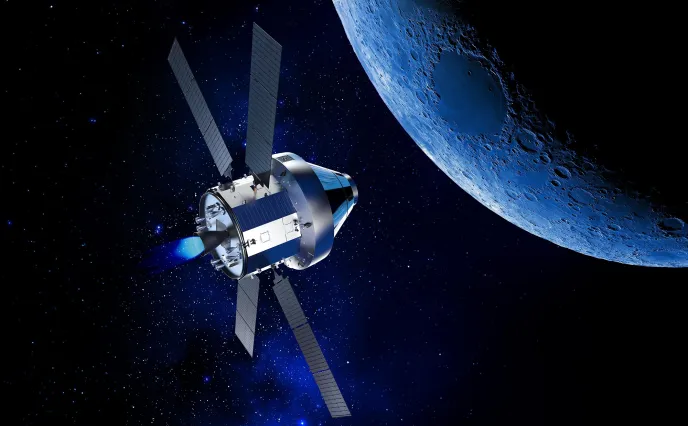
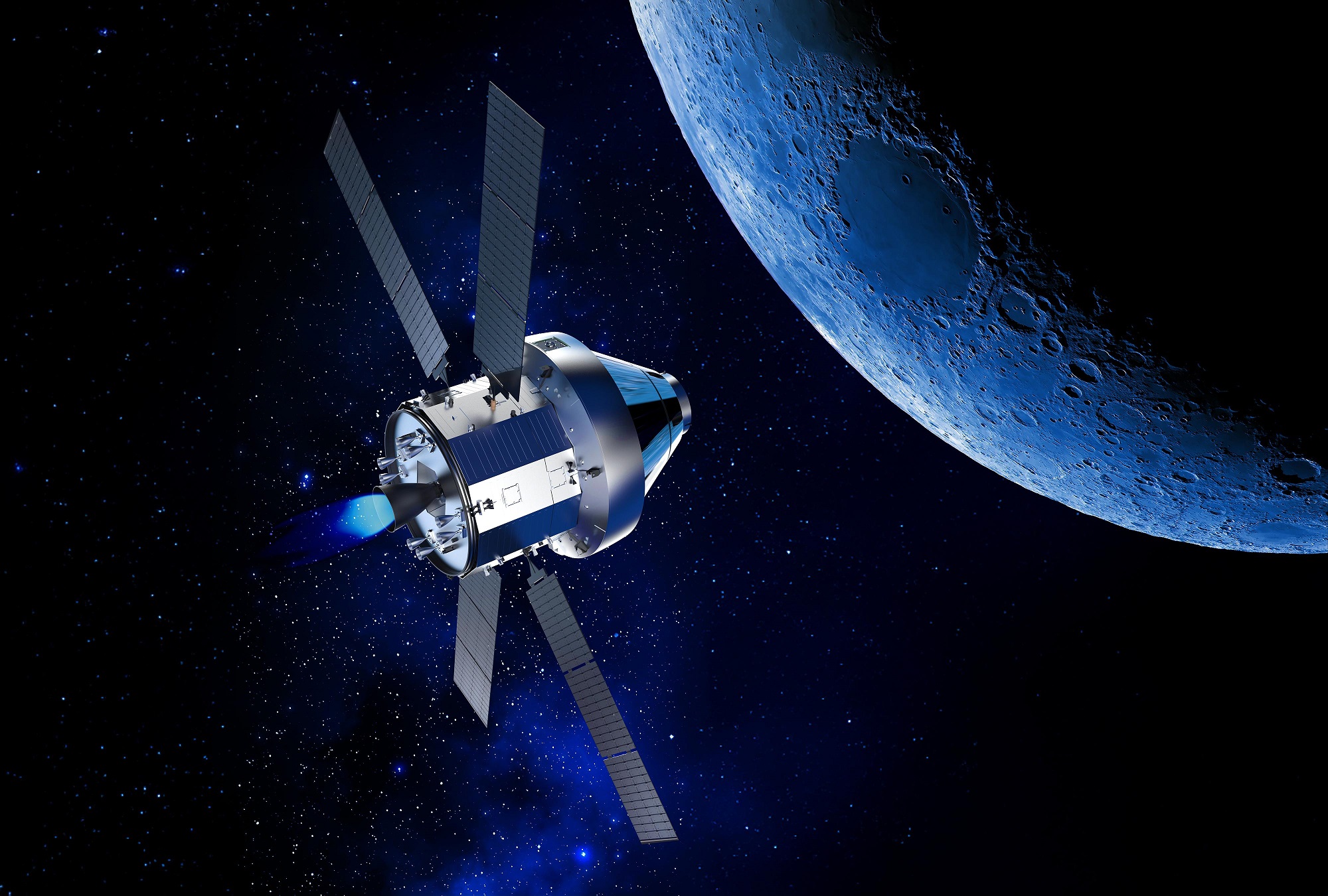
Prior to heading toward the Moon, the spacecraft will enter a high-altitude Earth orbit lasting 24 hours to test Orion's systems. Once separated from the SLS upper stage, the astronauts will manually pilot Orion, rotate the spacecraft, and perform a simulated docking maneuver with the upper stage to assess handling in close proximity. Afterwards, Orion will reverse course and ignite its Service Module engine to begin the lunar transit. At the core of this historic mission is ESA’s European Service Module (ESM), which provides Orion with life support, power, and propulsion to ensure safe human travel beyond Earth orbit.
A major contribution to Orion’s European Service module
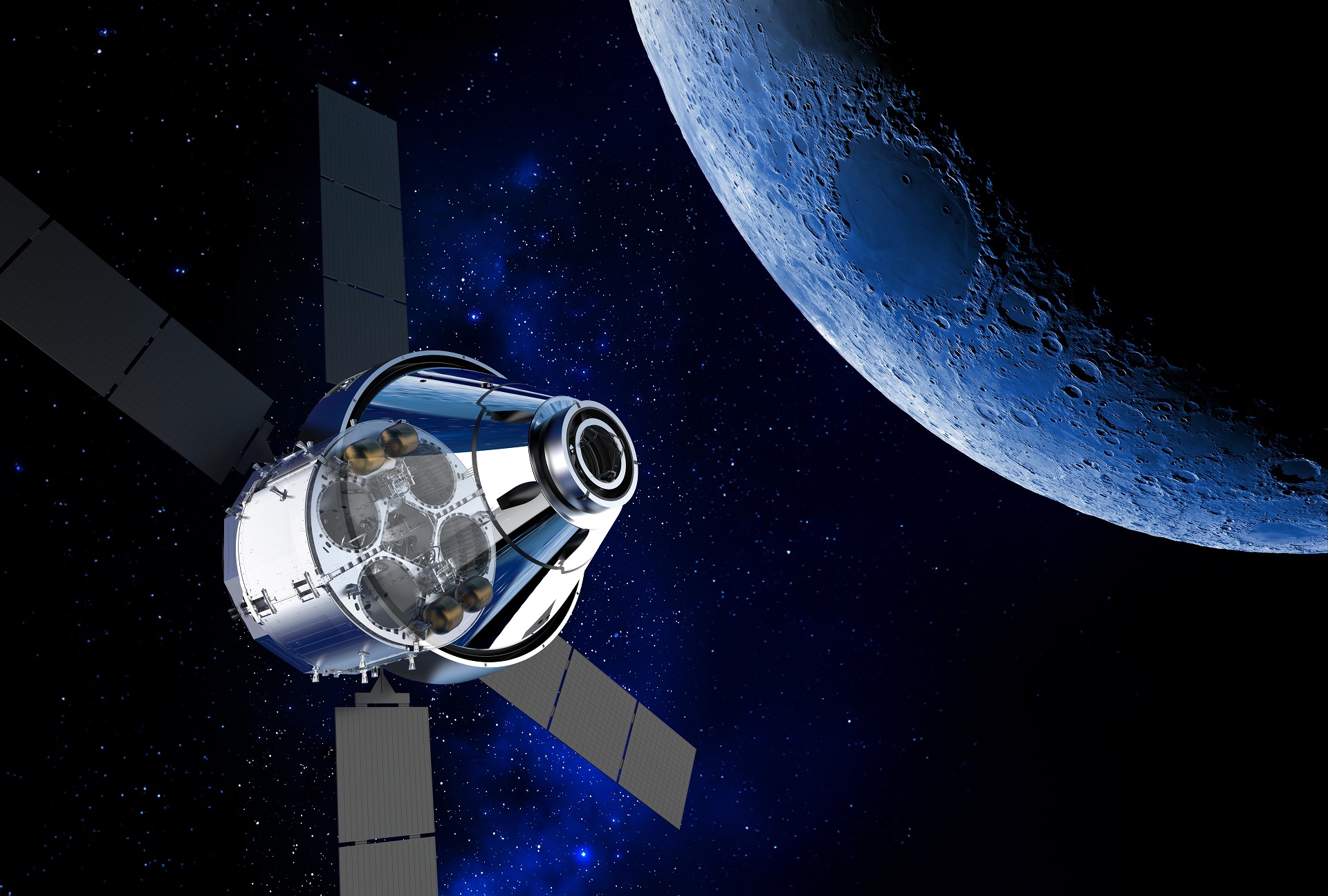
Thales Alenia Space supplies essential subsystems for all six ESA service modules, including the structure, thermal control system, and vital life support components. The thermal control system—with radiators—and the consumable service system, managing water, oxygen, and nitrogen distribution, are designed and built at our Turin facilities. The European Service Module program is led by prime contractor Airbus Defence and Space on behalf of the European Space Agency (ESA). Leonardo supports the program with photovoltaic panels and power control units for all ESM modules.
Astronauts will also manually operate the spacecraft to demonstrate proximity maneuvers using the European Service Module’s engines—capabilities crucial for future Artemis missions.
What we’re building for this adventure
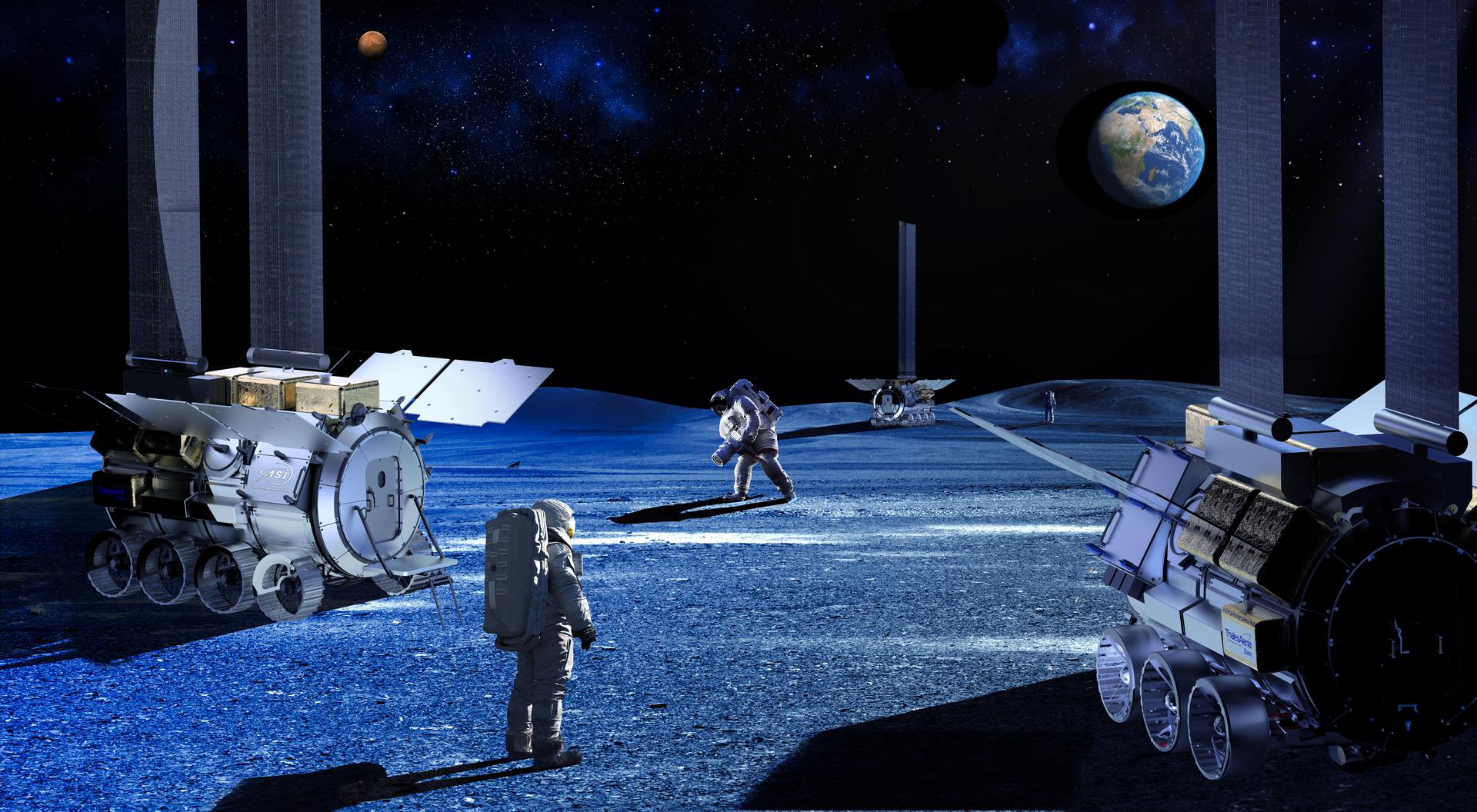
From Orion to lunar surface, Thales Alenia Space is leading the future of human space exploration.
We are the main industrial partner in the development of ESA’s Argonaut lunar lander—an autonomous European cargo transporter aimed for a 2030 mission—and were selected by the Italian Space Agency to provide the Multi-Purpose Habitation (MPH) module for surface living. MPH module features smart architecture focused on mobility, energy autonomy, and resource recycling, crucial for sustainable lunar habitation.
Moreover, Thales Alenia Space is a top industrial partner in ESA’s Moonlight project consortium, led by Telespazio, which will establish Europe’s first lunar navigation and telecommunications system.
Meanwhile, we continue to stand firmly alongside the European Space Agency, the Mohammed Bin Rashid Space Centre, and national agencies as programs evolve in relation to recent NASA’s Ignition Plan.
We believe that international collaboration and innovation are essential to shaping humanity’s future beyond Earth and securing a leading role in the new space era.