

ExoMars 2028: mission’s structural models getting ready for testing
“Is there life on Mars?”, as the superstar David Bowie so brilliantly sang for the very first time in 1971. Fifty-five years on, we are proud to update you on one of the most spectacular space exploration program of all time, ExoMars, and more specifically its second mission, ExoMars 2028.
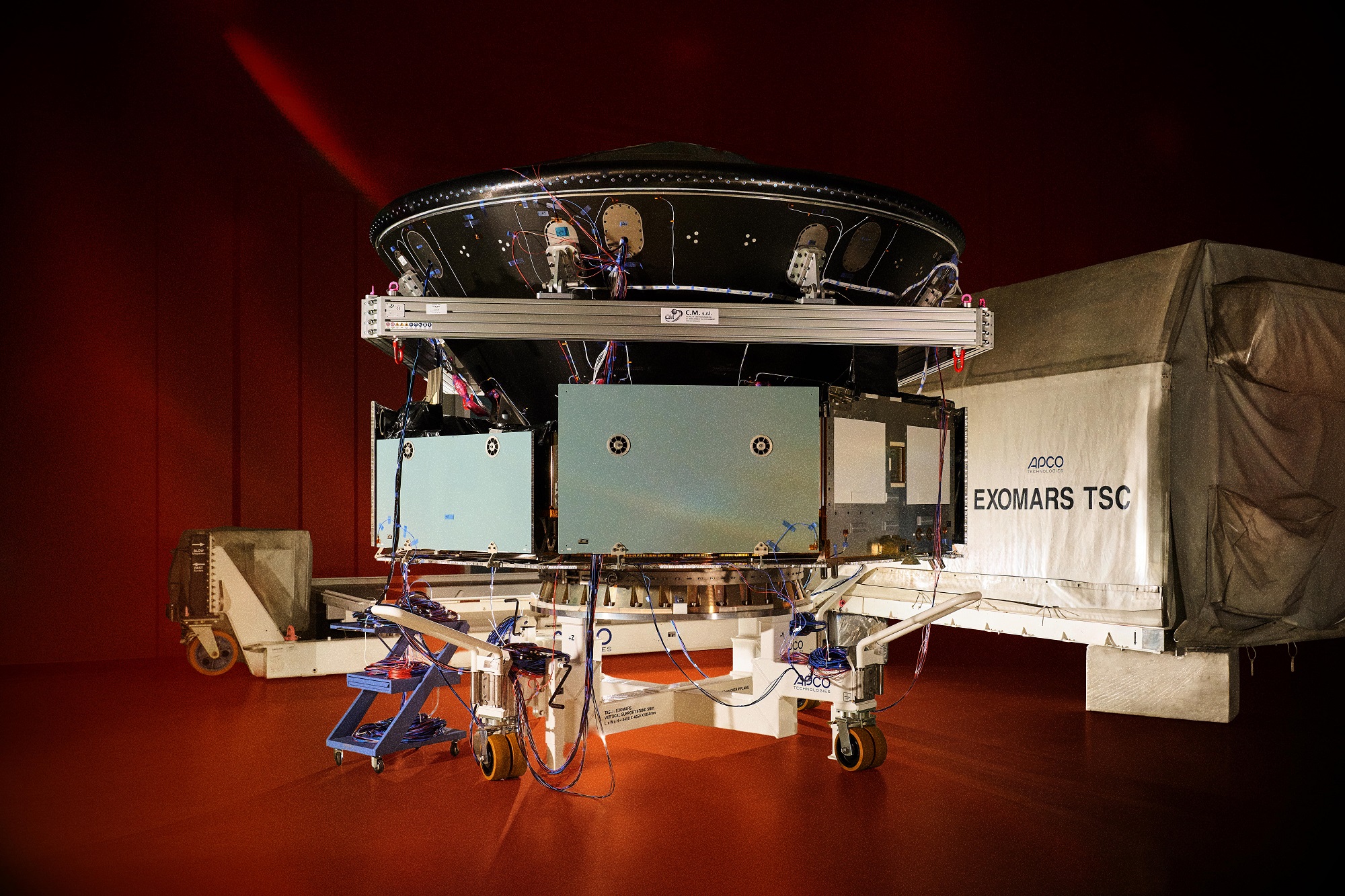
A new milestone has been reached on our journey to Mars. The Structural Models of the core elements of the ExoMars 2028 mission have been integrated in Turin and transferred to Cannes, where they will undergo the first of testing and verification phases.
This key delivery marks an important step forward in the development of one of Europe’s most ambitious planetary exploration missions, led by the European Space Agency (ESA) with international contributions, including NASA. Scheduled for launch in 2028, with arrival on Mars expected in 2030, the mission aims to search for signs of life beneath the Martian surface and to better understand the planet’s environment.
A complete representation of the flight module configuration
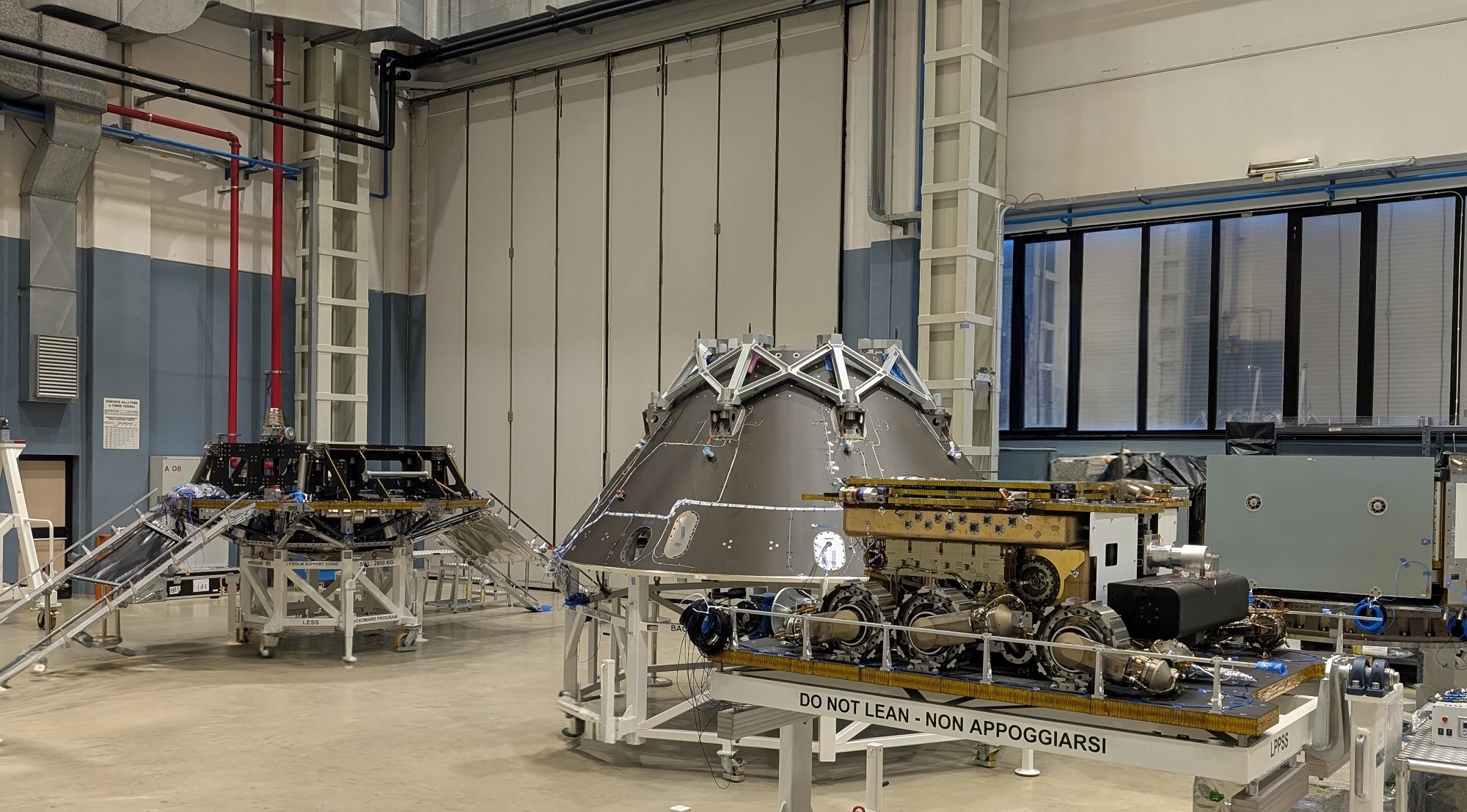
The Structural Models are fully representative of the flight module configuration meant to safely deliver the Rosalind Franklin Rover to Mars: the Carrier Module, responsible for the cruise phase from Earth to Mars; the Entry, Descent and Landing Module (EDLM), which will ensure the spacecraft’s atmospheric entry and descent; the Landing Platform, which will provide a stable base on the Martian surface; and the Rosalind Franklin Rover itself, equipped with a unique drill capable of reaching depths of up to two meters, designed to collect and analyze samples protected from surface radiation in search of traces of life.
Structural Models play a fundamental role in validating the mechanical design before the flight hardware is completed. They allow engineers to test how the spacecraft will behave under the most extreme conditions it will encounter throughout the mission, from the launch phase to the critical phases of entry, descent and landing on Mars.
Through an extensive test campaign, the structural models are first qualified in Cannes through vibration and acoustic testing, where they are exposed to the dynamic environment of launch. The campaign then continues in Turin with shock and separation tests, as well as static structural testing. Following the completion of these tests, the Proto-Flight Model (PFM), the fully integrated flight hardware, will undergo its dedicated test sequence in Cannes, including thermal vacuum, vibration, acoustic and electromagnetic compatibility (EMC) testing, as well as dynamic balancing.
Across these steps, every component is pushed to its limits before the mission begins. This approach is essential to reduce risk and progressively build the level of reliability required for such a complex deep space mission.
ExoMars 2028: who is doing what in the industrial consortium?
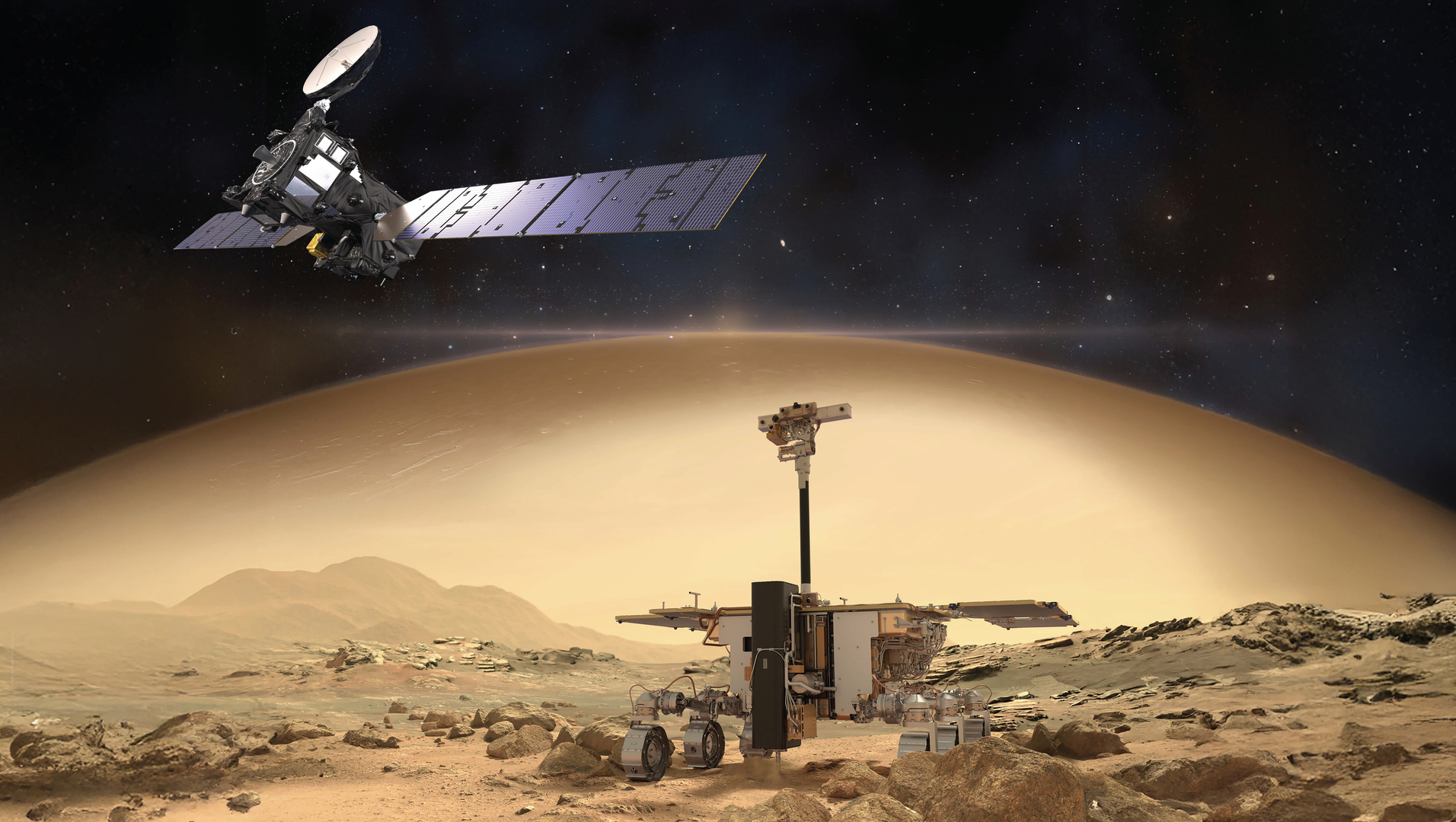
Thales Alenia Space plays a central role in the ExoMars 2028 mission, leading the overall industrial organization and system integration. As prime contractor, the company is responsible for the design and development of the EDLM, as well as key subsystems including the onboard computer and radar altimeter. It also leads Assembly, Integration and Test activities, manages the adaptation of previously developed mission elements, including the Carrier Module and the Rover, and is responsible for the integration of the Rover’s Analytical Laboratory Drawer, which will perform in-situ scientific analysis of the collected samples.
The mission also relies on strong industrial cooperation. Airbus Defence and Space in the UK is responsible for the rover vehicle and the Landing Platform, and contributes key mechanical, thermal, and propulsion systems for the final descent and landing phase. Leonardo, at its premises in Nerviano (Milan), contributes through key technologies, including the Rover’s drill, one of the mission’s most distinctive scientific instruments. ArianeGroup (France) is responsible for the front shield and thermal protection part of the aeroshell, OHB (Germany) for the carrier module and ALTEC (Italy) for the Rover Operations Control Center (ROCC). Our teams in France are responsible for developing part of the aeroshell (the rear shield) and the parachute, while Thales Alenia Space in Switzerland will supply the cameras and the electronic control unit for the landing module’s braking engines. Furthermore, Thales Alenia Space in Spain supplied the Actuator Drive Electronics (ADE) of the rover.
The shipment of the Structural Models to Cannes opens a new critical phase of testing and qualification. Step by step, ExoMars 2028 is taking shape, bringing Europe closer to answering one of humanity’s most compelling questions: has life ever existed on Mars?