
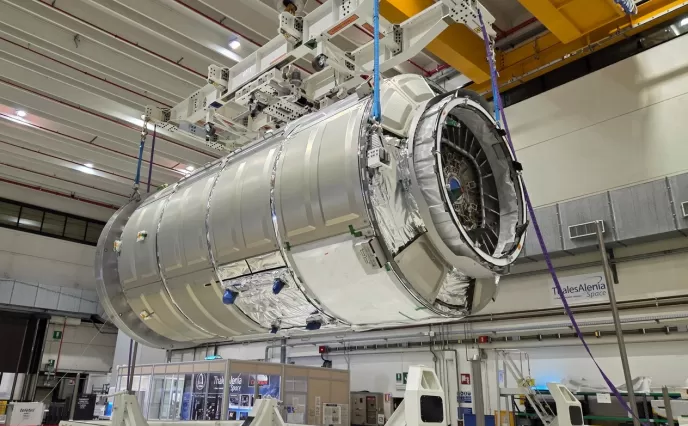

In a few days, Northrop Grumman’s Cygnus NG-25 spacecraft will embark on its journey to the International Space Station (ISS), carrying essential supplies, scientific experiments and equipment to support the astronauts living and working in orbit. This mission will also carry something rather extraordinary, a piece of contemporary art.
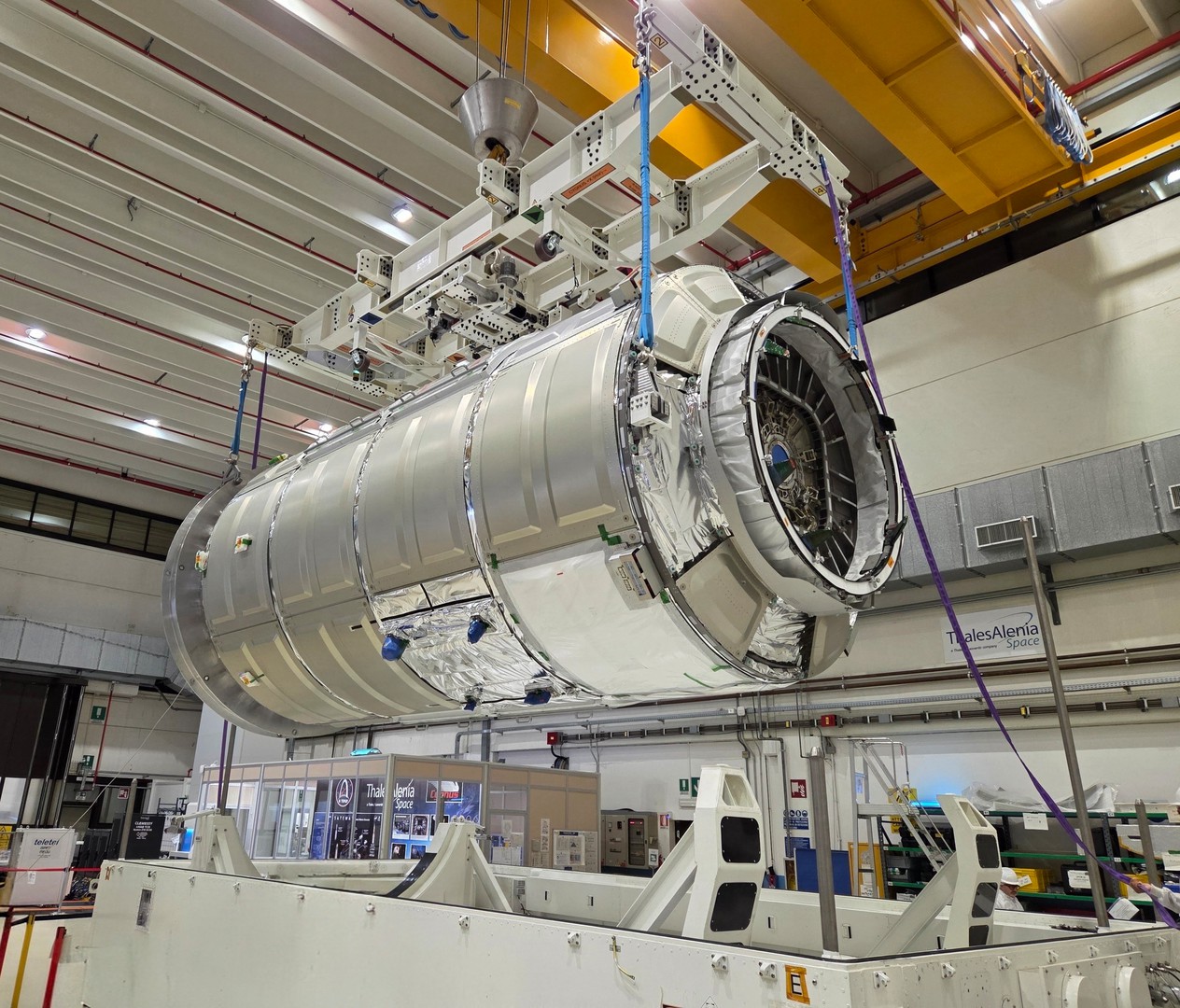
As a long-standing industrial partner of Northrop Grumman, Thales Alenia Space plays a key role in Cygnus missions, providing all the Pressurized Cargo Module (PCM), designed and manufactured at its Turin site. Our expertise goes beyond the design and manufacturing of space structures. It is rooted in a broader legacy, developing technologies and environments that support human life in space. Every element inside a spacecraft, from its structural components to its lighting systems, contributes to creating functional, reliable and increasingly comfortable environments for astronauts.
Through this collaboration between Thales Alenia Space, Politecnico di Torino and Luci d'Artista, the cover on the lighting system aboard Cygnus NG-25 will host a special artistic contribution. The artwork, Star(life)*, created by famous American artist Tony Oursler for Luci d'Artista, Turin's worldwide-known contemporary light art exhibition, has been adapted for its journey into space. Thales Alenia Space team, with support from Northrop Grumman, worked on translating the artist's original design into an embroidered image, applied as a patch to the Teflon-coatedsilk cover protecting one of the lighting units inside Cygnus. This special adaptation brings together artistic expression and aerospace engineering, requiring careful material selection and compliance with the stringent technical requirements of the space environment. Politecnico di Torino will provide further details on the artistic concept and the lighting design aspects of this collaboration.
An interesting example of this approach is the lighting system developed by our company and used for Cygnus’ Pressurized Cargo Module. Far more than a simple source of illumination, it is an innovative and modular solution, featuring flexible LED lighting units designed to adapt to the needs of the spacecraft's interior. Particular attention has also been dedicated to the protective covers surrounding the lighting units. These combine different materials and technologies, bringing together Teflon-coated silk and technical Nomex fabric. The use of Velcro fastening systems allows for a flexible and practical configuration, while ensuring compliance with the demanding requirements of the space environment.
The result is a solution in which engineering, material innovation and functional design come together. Developed with the involvement of Politecnico di Torino, this work also reflects the value of cooperation between industry, research and academia in advancing technologies for human spaceflight.
Donata Valletti, Lighting Product Manager at Thales Alenia Space, who was directly involved in the development of the project, explains: “One of the main challenges was combining materials developed for different applications, each with specific characteristics and tolerances, while ensuring their compatibility and performance. This required careful engineering and validation to meet the stringent requirements of the space environment, while preserving the artistic vision behind the project. It has been a rewarding experience for our team to provide our technical expertise to such a unique initiative, bringing together innovation, engineering and creativity in an entirely new way.”
Annamaria Piras, Head of Low Earth Orbit Programs at Thales Alenia Space, said: “This initiative perfectly highlights how space technology can connect with other fields of knowledge and human creativity. It also underlines the importance of Cygnus program, whose contribution extends well beyond cargo transportation as every mission supports the continuity of human presence in orbit, enabling scientific research and offering astronauts the resources they need to live and work aboard the ISS. We are proud to contribute to this mission alongside our long-standing partner Northrop Grumman, and to take part in this special collaboration with Politecnico di Torino, Luci d'Artista and Tony Oursler. With Cygnus NG-25, our technological expertise will once again help support life in space, while carrying a small but meaningful sense of the creativity that makes human exploration even more inspiring.”