
What would happen if an asteroid the size of the Great Pyramid of Giza was on a collision course with Earth? Its impact could destroy entire cities, or generate a devastating tsunami if it struck the ocean. Would humanity be prepared to respond to such a threat? That is precisely what the European Space Agency's Hera mission aims to help determine.
On September 26th 2022, NASA’s Double Asteroid Redirection Test (DART) mission carried out humanity’s first-ever asteroid deflection experiment by deliberately crashing its 580 kg spacecraft into Dimorphos, a moonlet measuring 151 meters in diameter, at a speed of 6.1 km/s. The impact generated a trail of debris stretching more than 10,000 km into space and altered Dimorphos’ orbit around its parent body, the 780-meter-wide asteroid Didymos, shortening its orbital period by approximately 33 minutes.
Four years later, the focus has shifted to understanding exactly how this deflection occurred so that the kinetic impact technique could be developed into a reliable and well-understood planetary defense method. Several key questions remain unanswered. Did the collision leave a crater or fundamentally reshape the asteroid? What are Dimorphos’ precise composition, structure and mass? Which of its properties contributed to a deflection far greater than pre-impact simulations had predicted?
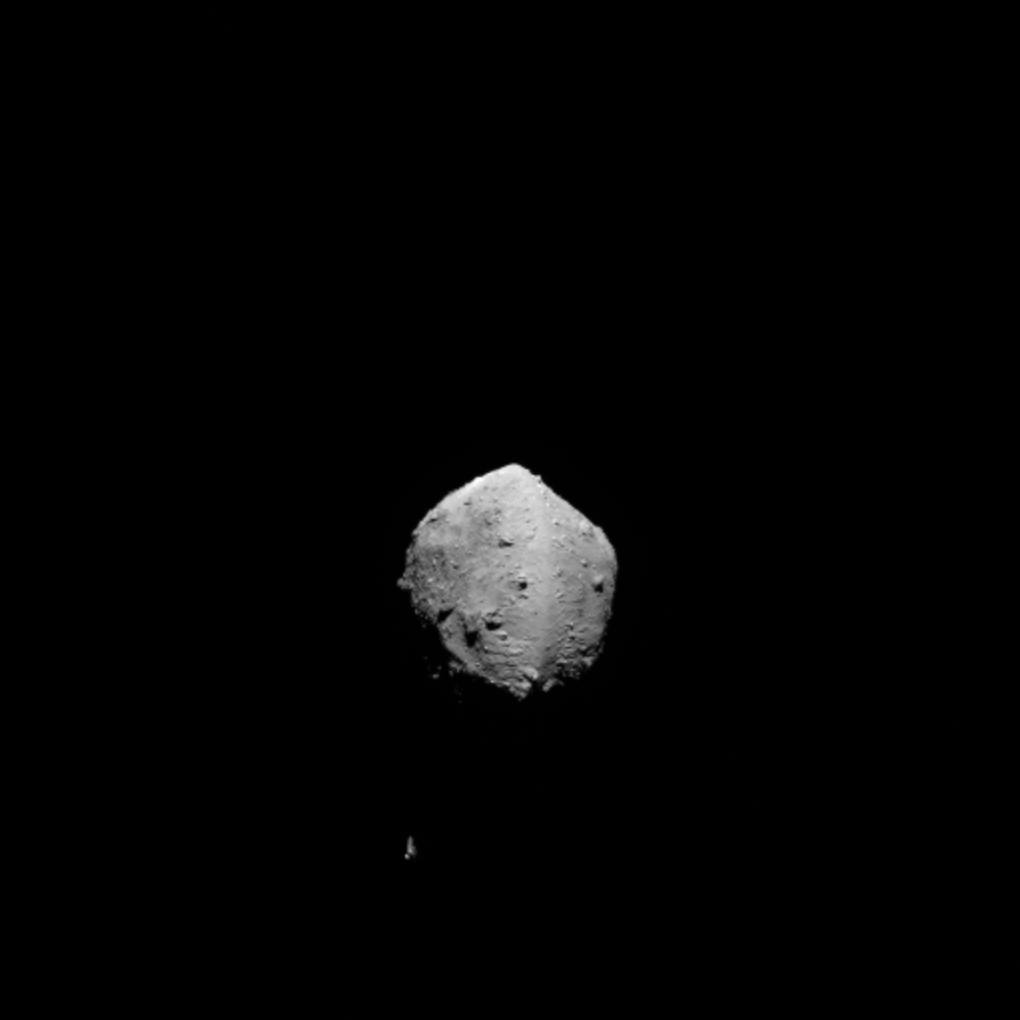
This is where the Hera mission comes in. After a journey of more than two years through deep space, the spacecraft has reached its destination, approximately 196 million kilometres away from Earth. Over the coming months, Hera will conduct a close-up investigation of the DART impact site on Dimorphos gathering critical data with its suite of scientific instruments. The Hera teams are already hard at work analysing the mission’s first observations. Detailed images of both asteroids will be unveiled on November 25th. In the meantime, ESA has released the first close up images, unveiling a previously unseen side of Didymos.
©ESA
Thales Alenia Space teams proudly contribute to Hera mission
Thales Alenia Space plays a crucial role in this mission by providing key technologies onboard Hera spacecraft developed and built across its sites in Spain, Italy, and Belgium. Our teams in Spain are responsible for the communications subsystem, which allows to control and track the spacecraft from a distance up to 500 million kilometers away and to send all the information gathered by Hera back to Earth. Our teams in Italy developed the state-of-the-art Deep Space Transponder, while our colleagues in Belgium assembled the Thales-built Travelling Wave Tube Amplifiers (TWTAs) and developed the Power Conditioning and Distribution Unit (PCDU), which respectively amplify the spacecraft's radio signals and provide power throughout the mission.
At Thales Alenia Space we are thrilled to contribute to Hera’s stunning mission, which highlights Europe’s ability to develop advanced space systems capable of tackling some of the most demanding challenges of our time.
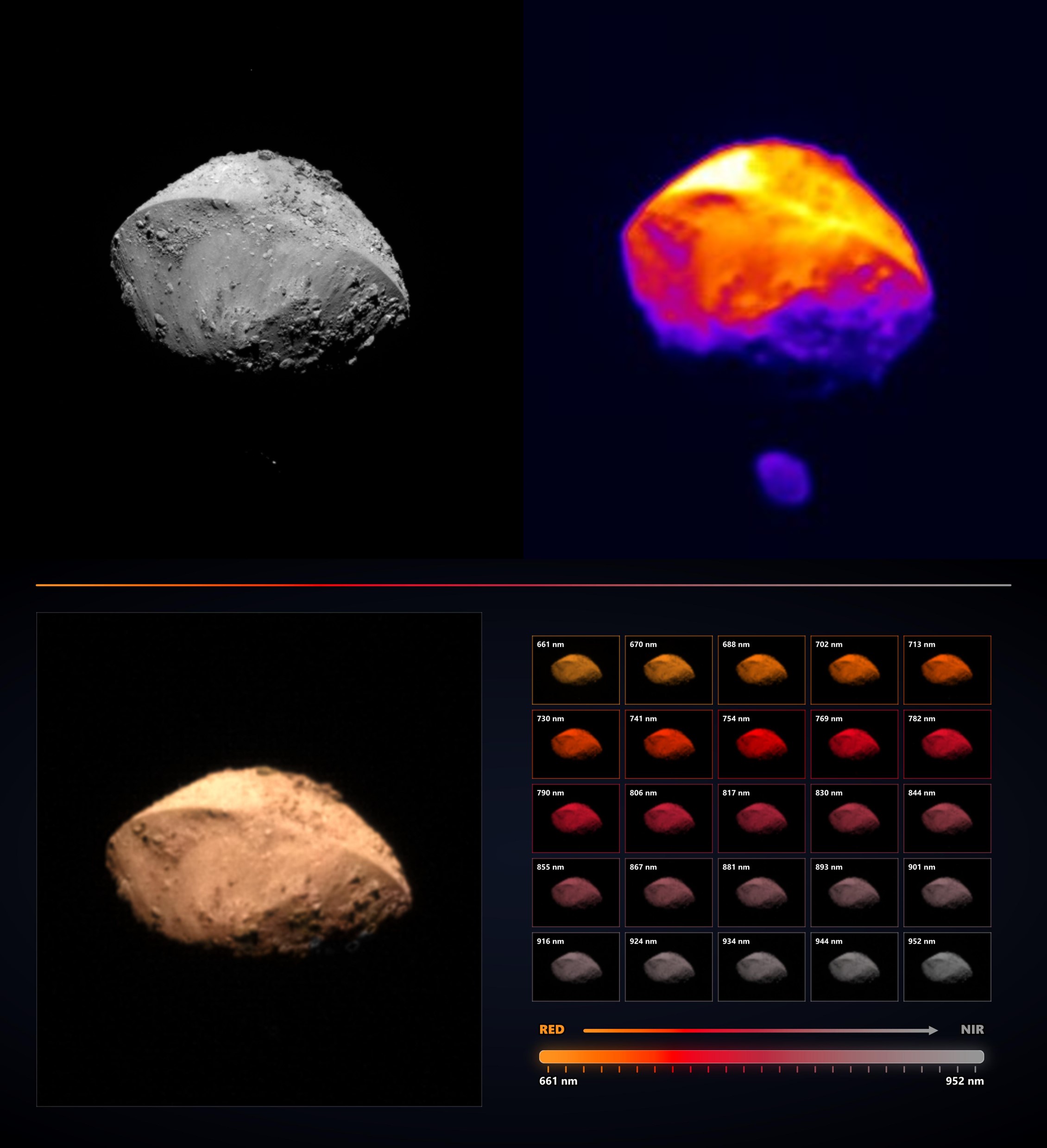
©ESA, JAXA
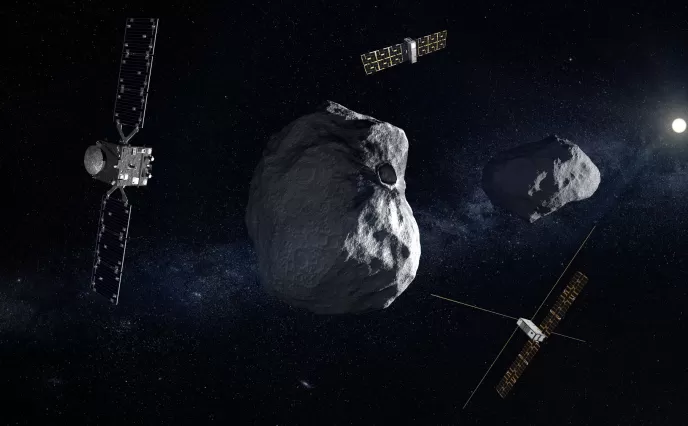
Hera mission goes far beyond imaging. It will conduct the most detailed investigation of binary asteroid system ever undertaken. Hera will also perform technology demonstration experiments, including the deployment of ESA’s first deep space ‘CubeSats’ – shoebox-sized spacecraft to venture closer than the main mission then eventually land – and an ambitious test of 'self-driving' for the main spacecraft, based on vision-based navigation.
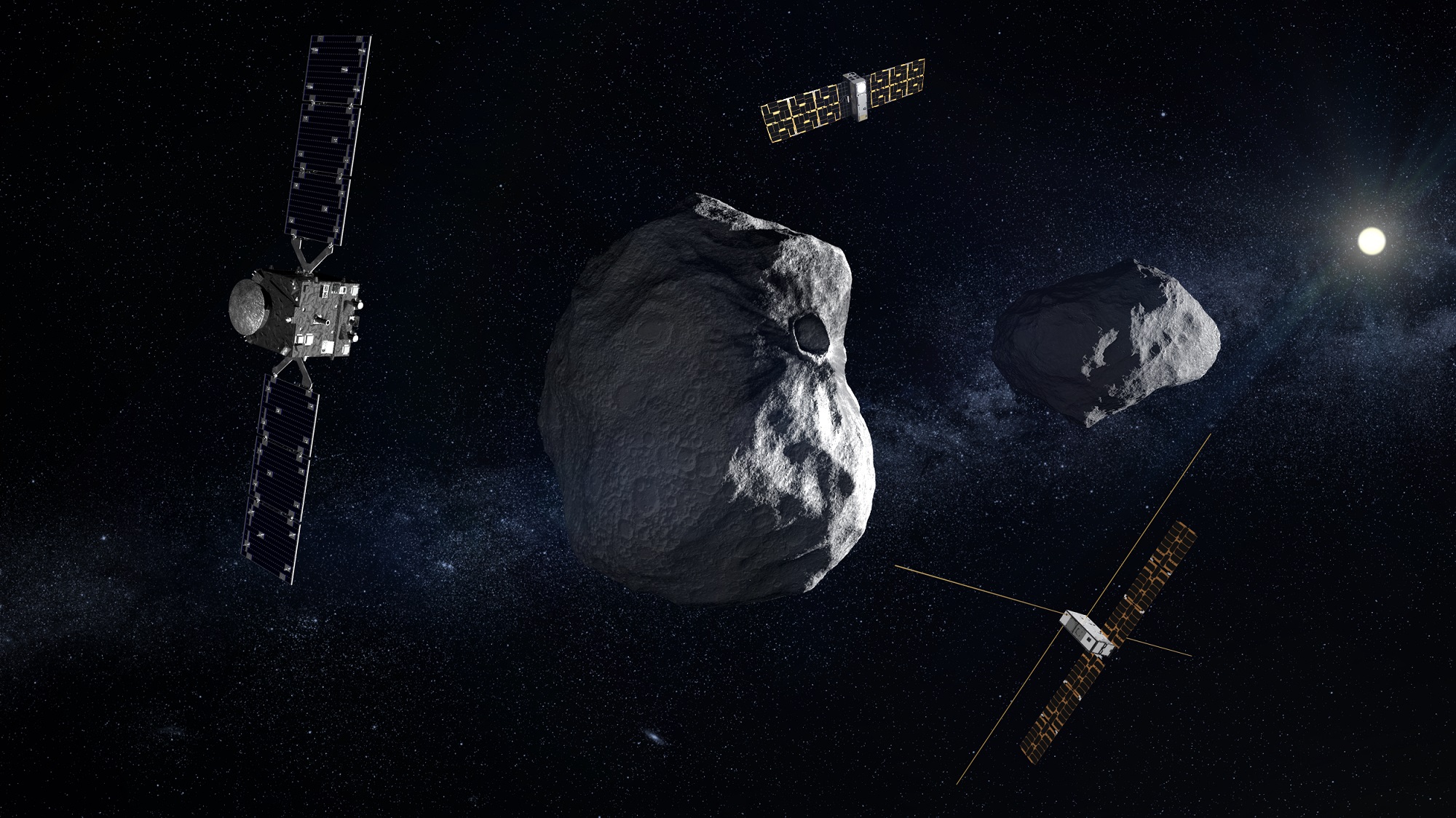
Explore Hera through ESA’s interactive platform, featuring a 3D spacecraft model, spacecraft operating data and a simulated preview of its arrival at the asteroid system: hera.esa.int.