

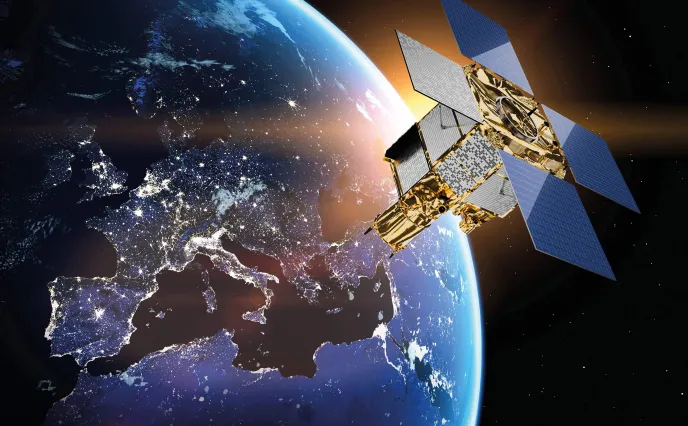
The satellite will enhance image quality of Earth's surface, vegetation, inland waters, and coastal areas
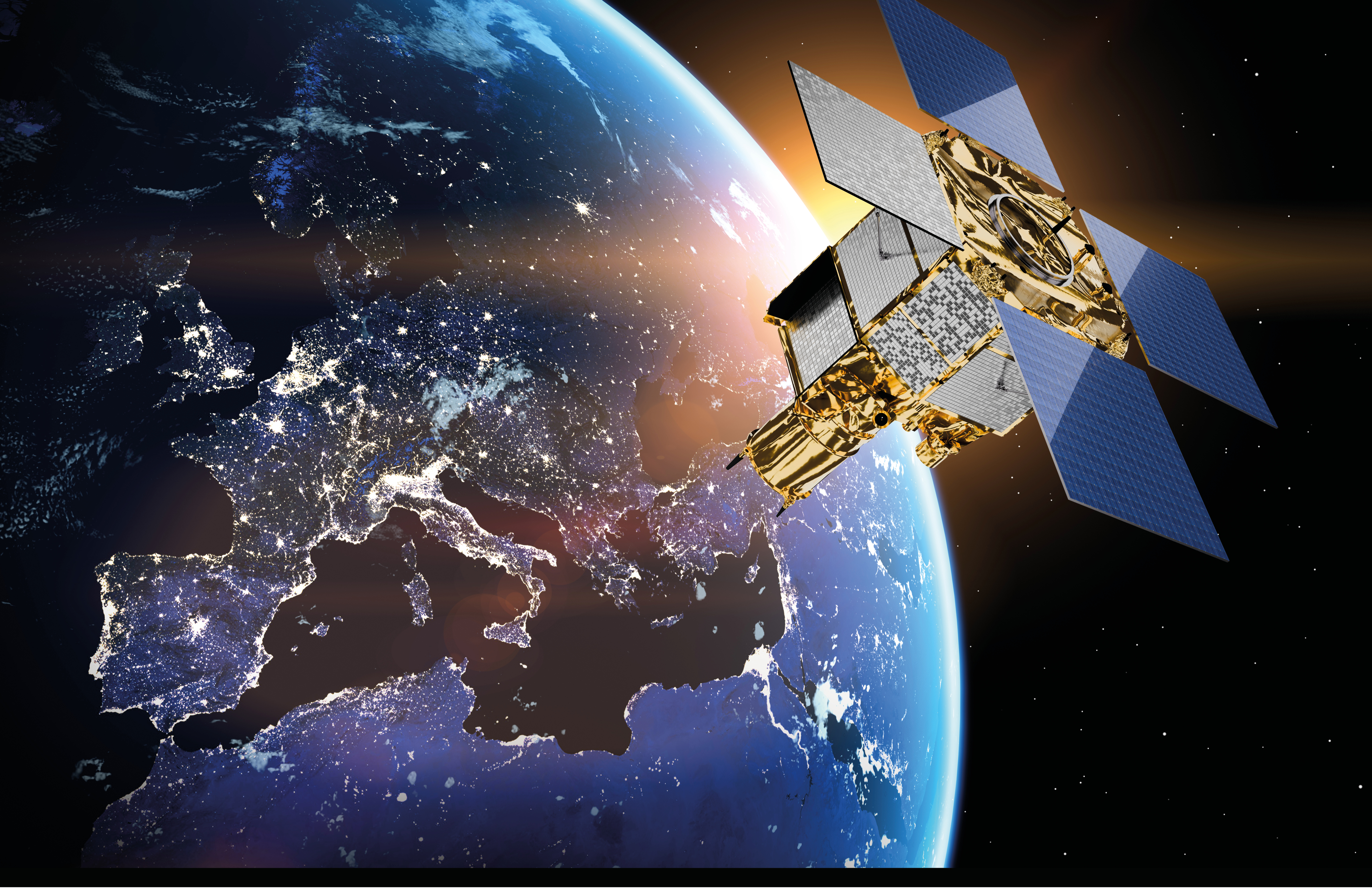
Rome, 29Th July 2026 – Thales Alenia Space, a joint venture between Thales (67%) and Leonardo (33%), has signed a contract with OHB Italia for the development of the PRISMA Second Generation Earth observation satellite for the Italian Space Agency (ASI). Scheduled for launch in 2031, the satellite will carry a hyperspectral instrument, built by Leonardo, featuring enhanced functional and resolution capabilities compared to the first generation.
Focus on hyperspectral technology
A key challenge in hyperspectral technology is capturing images with high quality and spatial resolution, along with frequent revisit times and a high signal-to-noise ratio. The PRISMA Second Generation satellite will enable improved spatial resolution through enhanced agility of both the platform and the instrument, increasing spatial resolution to at least 10 meters, compared to the current 30 meters. Additionally, it will introduce new functional capabilities designed to meet the diverse requirements of both scientific and operational users.
About the Consortium
The industrial consortium will be led by OHB Italia, which will be responsible for the mission and end-to-end system activities. Thales Alenia Space will be responsible for developing the satellite and delivering the PRIMA-S platform, built by the company, which will host the hyperspectral payload. Derived from the HE-R1000 (High Efficiency Radar) product line, the PRIMA-S platform is part of our Earth Observation product family and is capable of accommodating either radar or optical payloads. The satellite’s payload will be provided by the Italian Space Agency (ASI) as a Customer Furnished Item (CFI) supplied by Leonardo.
"This collaboration with the Italian Space Agency and OHB Italia represents a significant opportunity for Thales Alenia Space to advance its capabilities in Earth Observation, benefiting the scientific community and supporting practical applications for improved environmental resource management and better understanding of global phenomena,” said Giampiero Di Paolo, Thales Alenia Space Deputy CEO and SVP Observation, Exploration and Navigation. “This contract reflects Thales Alenia Space’s proven experience in manufacturing Earth observation satellites such as Copernicus and COSMO-SkyMed First and Second Generation, among others. Today’s achievement confirms the strategic decisions we have made with the PRIMA-S platform, renowned for its flexibility and capacity to host different types of payloads, addressing both Low and Medium Earth Orbit missions."
About Thales Alenia Space
Thales Alenia Space leverages a unique combination of skills, technological expertise, and industrial capabilities to deliver innovative solutions for telecommunications, navigation, Earth observation, defense, exploration, science, and orbital infrastructures— drawing on 50 years of proven experience. Institutions, governments, and private industry rely on Thales Alenia Space to design satellite-based systems that provide anytime, anywhere, connections and positioning, monitor our planet, enhance management of its resources, explore our Solar System, and unlock the mysteries of the Universe. Embodied by its Space for Life purpose, Thales Alenia Space sees space as a new horizon, helping build a better and more sustainable life on Earth, and beyond. A joint venture between Thales (67%) and Leonardo (33%), Thales Alenia Space also teams up with Telespazio to form the Space Alliance, which offers a complete range of solutions including services. Thales Alenia Space posted consolidated revenues of €2.36 billion in 2025 and has more than 8,000 employees in 7 countries with 14 sites in Europe. #spaceforlife www.thalesaleniaspace.com